Hunting Property Maintenance Services
Hunting Land Managed for Productive Season-After-Season Use
Hunting Property Maintenance Services in Boston for sight line clearing, food plot preparation, and year-round acreage management on large rural parcels
Brush that closes in around a stand position between seasons is one of the most consistent problems on unmanaged hunting acreage in this region. Overgrown sight lines, blocked access trails, and food plots that have not been properly prepped reduce the functional value of the land without changing the deed. CJ Properties addresses all three through selective brush clearing, targeted tree removal, and food plot site preparation across Thomas County and Northern Florida, with the owner personally visiting each property to price the work and schedule the project around the upcoming hunting season.
The maintenance work is scoped based on what each property actually needs rather than a fixed service package. Sight line clearing removes the brush and low-canopy growth that blocks visibility from stand positions without taking down the timber that provides cover. Access trail clearing opens paths to stands and feeding areas for equipment and foot traffic. Food plot preparation goes further, involving selective tree removal where canopy shade is limiting growth potential, followed by surface clearing to prepare the ground for planting. Most projects in the seven-county service region run multiple weeks, and CJ Properties schedules pre-job calls the day before and again one to two hours before arrival so landowners managing remote properties stay informed throughout.
Set up an on-site meeting with CJ Properties to walk the property and identify which sections need clearing, access work, or food plot preparation before the season opens.
What Proper Hunting Land Maintenance Actually Requires
Selective clearing on hunting acreage is a precision task, not a bulk removal job.
Removing too much canopy eliminates the cover structure that keeps deer moving through a property rather than around it. The decision about which trees stay and which come out is made on the ground, stand by stand, based on sight angle requirements, sun exposure for food plots, and trail geometry. CJ Properties handles these calls during the site estimate so the crew has clear direction before equipment rolls onto the property, reducing the chance that productive cover gets removed unnecessarily.
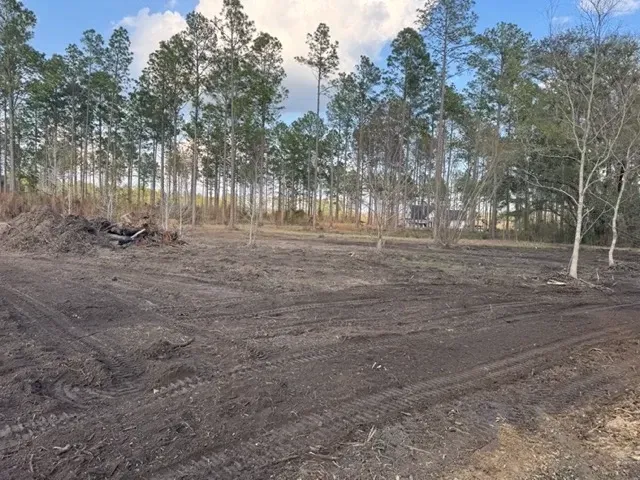
After maintenance is complete, the observable changes are specific and measurable. Sight lines open to the distances the stand positions require. Access trails are passable by ATV or side-by-side without requiring operators to exit and move brush. Food plot areas that were shaded are now receiving the sun exposure that establishes viable growth. These are not cosmetic outcomes—they directly affect how the land functions during a hunting season and how consistently it produces over time.
Repeat relationships drive a significant share of CJ Properties' hunting land work, and the owner's direct involvement in site estimates and scheduling is what sustains those relationships across multiple seasons. Large acreage hunting properties in the Thomas County area require year-round attention that goes beyond what the owner or a single lease crew can manage with hand tools, and the combination of forestry mulching and excavation equipment CJ Properties deploys handles the volume and vegetation density that defines most of these properties.
How is selective clearing different from full clearing on hunting acreage?
Selective clearing targets specific vegetation for removal based on sight line angles, trail routing, and food plot placement, leaving the surrounding timber and understory intact, whereas full clearing removes all vegetation in a zone regardless of its habitat or cover value.
What site preparation does a food plot area require before planting?
The area typically requires canopy thinning to achieve adequate sun exposure, followed by surface brush removal, stump extraction in the planting zone, and grading to create a ground surface that can be tilled and seeded without equipment interference from root systems.
When should hunting property maintenance work be scheduled relative to the hunting season?
Work that involves heavy equipment on access trails and food plot areas is best completed at least six to eight weeks before the season opens so that ground disturbance has settled, surface growth has begun to establish, and the property has returned to its natural ambient activity level before hunters arrive.
How does the age and overgrowth level of a property affect how maintenance is scoped?
Older rural parcels throughout Thomas County that have not been actively managed for several seasons typically require a heavier initial clearing pass to reset the baseline before routine annual maintenance becomes practical, because understory growth on neglected acreage often reaches a density that requires forestry mulching rather than brush cutting equipment to process efficiently.
What does a properly maintained food plot area look like once work is complete?
The cleared zone is flat, free of stumps and root interference within the planting area, open to full sun or near-full sun exposure depending on tree removal scope, and accessible at both ends by the equipment the property owner uses for planting and managing the plot through the season.
Reroofing Questions? We’ve Got You Covered
Hunting land maintenance on large rural acreage in the Boston area involves tradeoffs between clearing efficiency and preserving the habitat structure that makes the property productive. These questions address how the work is approached and what to expect from each phase.
CJ Properties also provides hunting property maintenance in Thomasville, Valdosta, Tallahassee, and communities across the seven-county service region. Call (229) 630-1331 to speak with the owner directly about your property's maintenance requirements and timeline.
Ready to Get Started with CJ Properties?
We're here to help!
Contact Us
We will get back to you as soon as possible.
Please try again later.